
Here’s the thing about most leadership training programmes: they teach you everything except what actually matters.
They’ll show you how to read a balance sheet. They’ll walk you through strategic frameworks. In most training contexts, they’ll even teach you how to give feedback in one-on-one settings. But they somehow skip over the skill that separates mediocre managers from inspiring leaders. It’s the ability to stand in front of a room and move people to action.
It’s a curious omission. Particularly when you consider that 91% of employees say their leaders lack critical communication skills, and 62% of leaders report communication breakdowns as a leading cause of workplace conflict. The data tells us what common sense already knows: leadership without effective communication is like a ship without a rudder. Lots of motion, little direction.
The Communication Skills Gap Nobody Talks About
Let me paint you a picture. Sarah had just been promoted to regional director. She was sharp, strategic, and genuinely cared about her team. Her MBA was impressive. Her results were solid. Yet within six months, her department’s engagement scores had dropped twelve points.
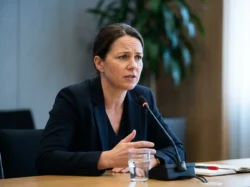
What happened? Sarah could analyse spreadsheets like nobody’s business. She could craft brilliant strategy documents. But put her in front of three hundred employees at the annual town hall, and something shifted. Her voice tightened. Her message became convoluted. The passion she felt for her vision couldn’t quite make it past her throat.
Her team walked away confused about priorities. Rumours filled the silence she left behind. Talented people started polishing their CVs. Not because the strategy was wrong, but because they couldn’t see themselves in it. They couldn’t feel it.
This story plays out in boardrooms across the country every single day. Research from Johns Hopkins Carey Business School analysing fifty years of leadership studies confirms what practitioners have long suspected: communication quality is the single strongest predictor of leadership effectiveness.
Why Public Speaking Training Changes Everything
Now, here’s where it gets interesting. The vast majority of the population—around 77%—experiences significant fear around public speaking. In boardrooms and corner offices, this fear doesn’t disappear. It simply wears an expensive suit and calls itself “keeping things brief” or “preferring to let the work speak for itself.”
But here’s what separates truly transformative leaders from the merely competent: they recognise that public speaking for leaders isn’t a peripheral skill. It’s the very centre of influence. You cannot inspire without it. You cannot align without it. You certainly cannot lead through change without it.

Think about the leaders you actually remember—not the ones you respected from a distance, but the ones who genuinely moved you. What do they have in common? They could articulate a vision that made your heart beat faster. They could explain complex ideas in ways that felt inevitable rather than overwhelming. They made you feel seen, even in a crowd of hundreds.
These aren’t innate gifts. They’re learned capabilities. Capabilities that typical development programmes routinely neglect to develop.
The Hidden Cost of Neglecting Speaking Skills
When leaders can’t communicate with presence, organisations pay a price that’s rarely calculated but deeply felt. Projects stall because teams don’t understand the “why” behind the “what.” Cultures fracture because messages get mangled in transmission. Innovation dies because people are afraid to pitch their ideas.
More than 61% of university students report fear of speaking in public, and these students become your future managers. If universities aren’t addressing it and corporate training programmes aren’t either, we end up with entire generations of leaders who intellectually understand their brief but cannot emotionally deliver it.
The irony? Most leadership development budgets pour thousands into technical competencies that will be obsolete within five years. Meanwhile, the timeless skill of human connection (the one thing AI cannot replicate) gets a thirty-minute module and a pat on the back.
And there’s another complication. The higher you climb, the larger your audiences become. The informal coffee catch-ups that served you well as a line manager become impossible when you’re leading five hundred people. Your words get recorded, replayed, and scrutinised. Every hesitation gets magnified. Every ambiguity gets weaponised.
Without deliberate practice, these moments expose rather than elevate.
Building Communication Capability Into Leadership Development
So what’s the alternative? It starts with recognising that leadership communication skills aren’t bolt-on extras. They’re foundational architecture.
Effective programmes integrate speaking practice from day one. They create safe spaces for leaders to stumble, recover, and refine their presence. They teach the mechanics of influence: vocal variety that maintains attention, storytelling that creates emotional resonance, and audience awareness that shapes message delivery.
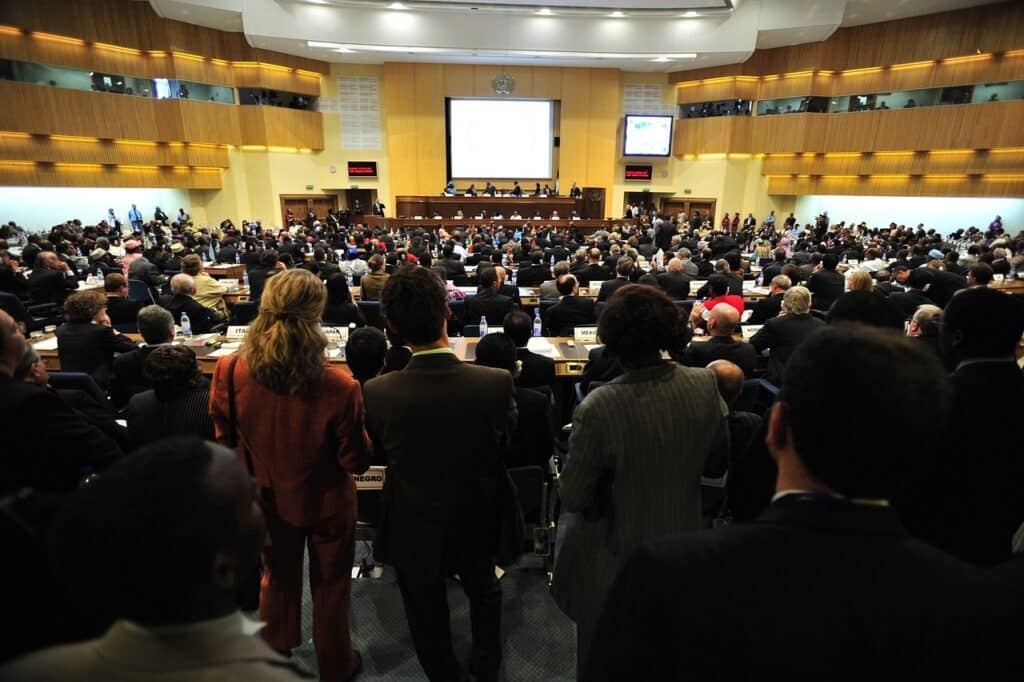
They also recognise something crucial: your authentic voice matters more than perfect polish. The goal isn’t to manufacture a TED Talk persona. It’s to help you communicate with clarity and conviction—whether you’re addressing a boardroom of twelve or a stadium of twelve thousand.
Here’s the shift in thinking that changes everything. Stop asking “How can I get through this presentation without embarrassing myself?” Start asking “How can I make this message impossible to ignore?” The first question comes from fear. The second comes from purpose, and that’s precisely where real leadership lives.
The leaders who master this aren’t working harder than their peers. They’re working differently. They prepare differently. They think about their audiences differently. And when the moment comes, they show up differently.
If your current development plan treats communication as an afterthought, you’re not just missing an opportunity. You’re gambling with your effectiveness. The leaders who invest in their speaking ability, who get uncomfortable, get coached, and get better, compound their impact exponentially.
For those ready to bridge this gap, working with specialists who understand the unique pressures of executive communication can accelerate your growth considerably. Executive coaching programmes that combine strategic leadership insight with practical speaking development offer the integrated approach that fragmented training often misses.
The question isn’t whether you can afford to develop this capability. In an age where ideas compete for attention and trust is fragile, the real question is whether you can afford not to.
Tags: leadership coaching, Leadership Communication Skills, Public Speaking, Public Speaking For Leaders, public speaking skills, Public Speaking Training


