

Mark had spent fifteen years climbing the corporate ladder. He’d earned his MBA from Wharton. Launched three successful product lines. Managed teams of two hundred people.
But put him on a stage? His hands trembled. His mouth went dry. His mind, usually sharp as a tack, turned to complete static.
“I once forgot my own daughter’s name during a keynote,” he told me, half-laughing, half-mortified. “Not great when you’re supposed to be inspiring a room full of investors.”
The Invisible Ceiling
Here’s the thing about executive success. It’s not just about spreadsheets and strategy sessions. At a certain level, your presence matters. Your voice matters. And Mark knew he’d hit a ceiling he couldn’t see past.
His company was preparing for a major IPO. The board wanted him front and center. Media appearances. Investor roadshows. Keynote after keynote. And Mark was quietly panicking.
He’d tried the usual fixes. Watched TED Talks until his eyes hurt. Read every public speaking book on the market. Practiced in front of his bathroom mirror. Nothing stuck. The fear remained: a tight knot in his chest that woke him at 3 AM.
His CEO finally pulled him aside. “You’re brilliant,” she said. “But nobody knows it when you’re reading from a script like you’re reciting a grocery list.”
Ouch. But fair.

Finding the Right Help
Mark didn’t need generic advice. He needed someone who understood the pressures of C-suite communication. Someone who could teach him to command a room without losing his authenticity.
That’s when he discovered executive leadership coaching.
Truth is, there’s a massive difference between standard public speaking training and coaching designed for executives. Regular courses teach you to project and gesture. Executive coaching digs into why your voice shakes when authority figures are watching. It rebuilds your relationship with being seen.
Mark’s coach didn’t start with breathing exercises. She started with a single question: “What are you actually afraid will happen up there?”
Turns out, Mark wasn’t scared of public speaking. He was scared of being judged as an impostor. Classic high-achiever syndrome. The more successful he’d become, the more he feared being “found out.”
The Real Work Begins
Look, overcoming stage fright isn’t about eliminating nervousness. It’s about changing your relationship with it.
Mark’s leadership training focused on three things:
First, reframing the physiological response. That racing heart? It’s not anxiety. It’s your body preparing you to perform. Those sweaty palms? Evidence that you’re energized, not afraid. Studies from Harvard Business School show that viewing stress signals as helpful rather than harmful improves performance under pressure (Crum et al., 2013).
Second, owning his story. Mark had achieved things. Real things. But he’d never learned to talk about them without sounding like he was bragging. His communication coach had him practice “humble authority”: sharing accomplishments as service to the audience, not self-promotion.
Third, preparation that actually works. Not memorizing scripts. Not obsessing over slides. But structured rehearsal that builds muscle memory for the moments when nerves hit.
The Proof
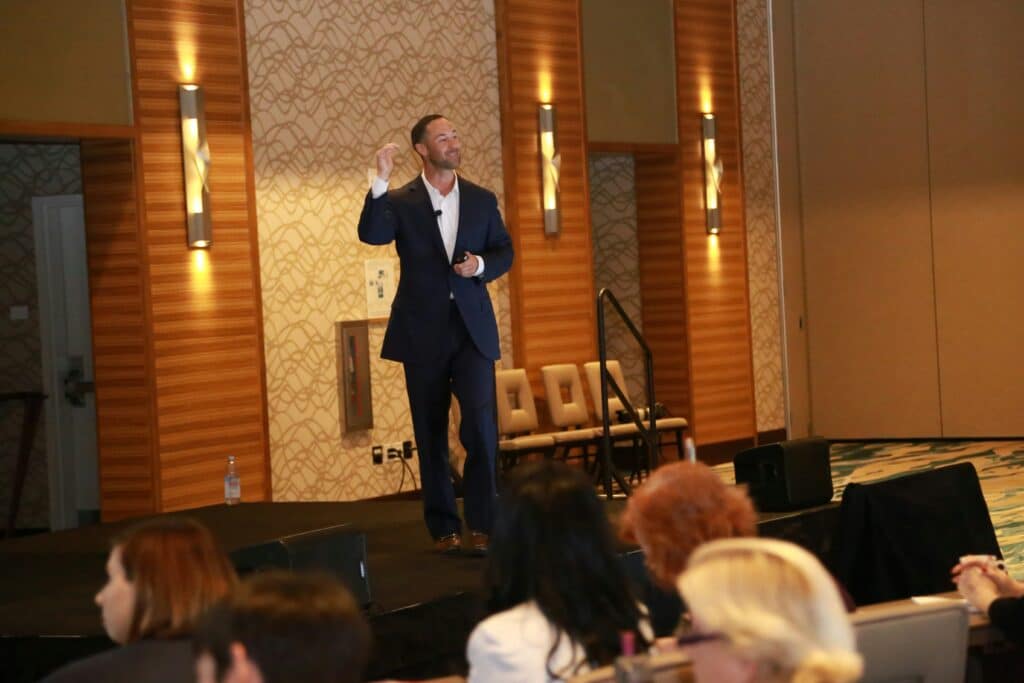
Six months later, Mark stepped onto the stage at the annual shareholders meeting.
Different man. Same intelligence, but now packaged in presence. He opened with a personal story about his first failed product launch. The room leaned in. He made eye contact with individuals, not the blur of faces. When his clicker died halfway through, he laughed, made a joke about technology hating him, and continued without missing a beat.
Afterward, three board members asked who’d coached him.
But the real win? Mark actually enjoyed it. “For the first time,” he told me, “I wasn’t spending the entire talk waiting for it to end. I was there. Present. It felt like the best version of me was finally showing up.”
Research from the University of Michigan found that executive presence accounts for up to 28% of what makes someone promotable, more than actual performance or expertise (Carter & Pelletier, 2013). Mark had the expertise. He just needed the presence to match.
What Mark Learned
His biggest revelation? Confidence isn’t a personality trait. It’s a skill.
“I spent fifteen years thinking I just wasn’t a ‘natural’ speaker,” Mark said. “What I learned is that naturals are made, not born. They just made themselves earlier than I did.”
He now mentors junior executives through their own speaking anxiety. Pays it forward. And every time someone tells him he’s “so confident up there,” he smiles and shares what his coach taught him:
“They’re not judging you as harshly as you’re judging yourself. And even if they are, you have something worth saying anyway.”
Maybe This Sounds Familiar
If you’re an executive who’s mastered everything except the spotlight, you’re not broken. You’re normal. And more importantly, you’re fixable.
The corner office comes with microphones now. Investor calls. All-hands meetings. Media interviews. The higher you climb, the more visible you become.
But visibility isn’t the enemy. It’s the opportunity.
Mark still gets nervous before big presentations. He says he hopes he always will. It’s how he knows he cares. But now the nerves fuel him instead of freeze him. He arrives early, breathes deeply, and remembers what he’s there to give, not what he might lose.
And honestly? That’s what separates executives who plateau from executives who keep rising.
The Question Isn’t Whether You Can
Mark’s story isn’t unique. We’ve seen hundreds of executives transform from nervous wrecks into commanding presences. Scientists, engineers, introverts, extroverts. It doesn’t matter where you start.
What matters is whether you’re willing to do the work.
Executive coaching isn’t magic. It’s structured practice with someone who knows which structures actually work. It’s having a guide who’s walked this path before and can spot your specific blocks.
For Mark, that support changed everything. Not just his speaking, but his leadership. When you stop fearing visibility, you stop holding back your best ideas. You stop deferring in rooms where you should be leading.
You step into the spotlight. And you discover it’s not as scary as you imagined.
Actually, it might even feel like home.
Ready to write your own transformation story? Get in touch to learn how our executive coaching programmes help leaders move from fear to presence and from presence to impact.
Tags: confidence, Executive Coaching, Leadership Development


